
11x
Sales
AI "digital workers" for sales, including the Alice SDR and Julian phone agent.
ai-sdroutbound-automationsales
View →

Apollo is a sales intelligence and prospecting platform that combines B2B contact data, email sequencing, and workflo...
Our assessment — not a user rating. How we score
Verified against each vendor's own trust page. Not legal advice — confirm current status with the vendor.
One of the best value plays for pairing a large B2B contact database with sequencing and dialing in a single seat. But database accuracy varies by region and role, so it suits SMB and mid-market sales teams more than enterprise data purists.
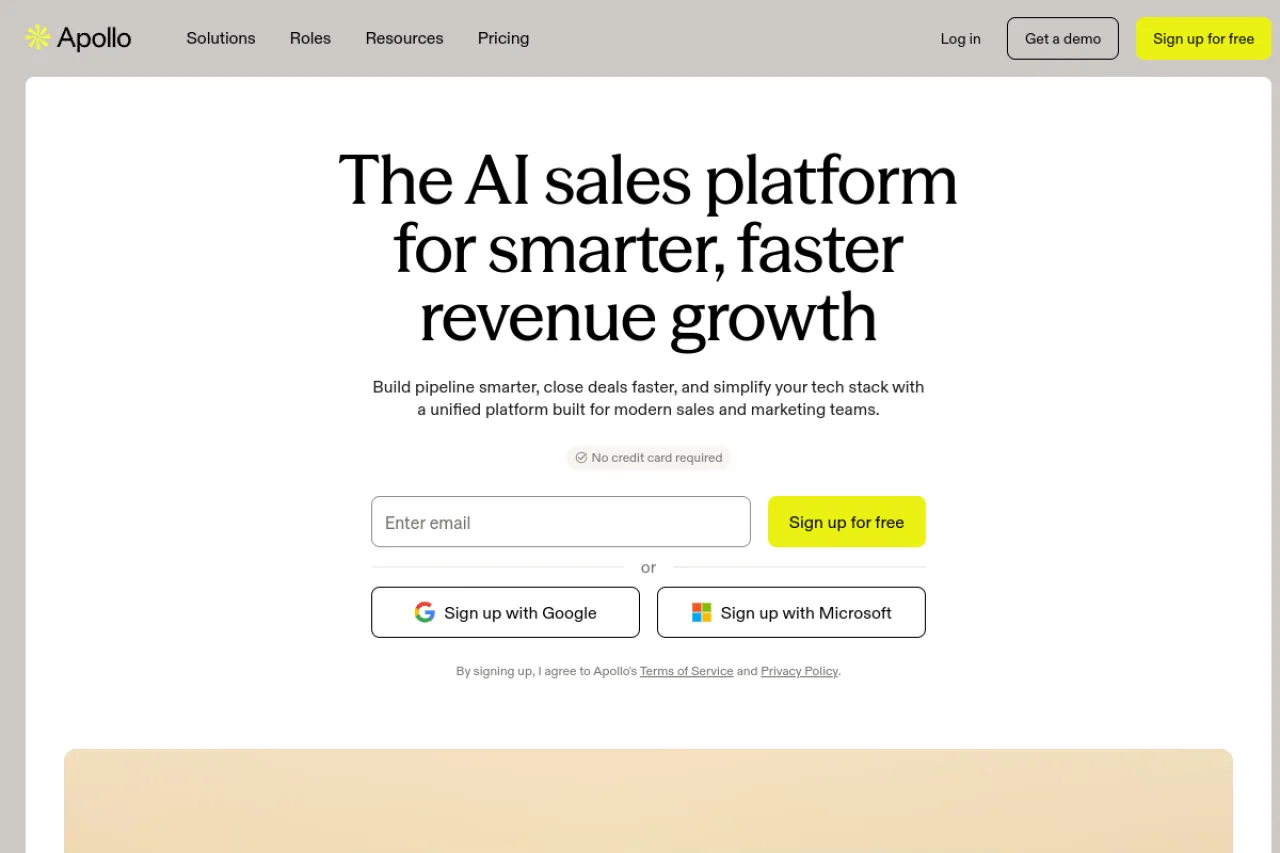
Apollo is a freemium sales intelligence platform that combines a large B2B contact database, email sequencing, a dialer, data enrichment, and workflow automation in one tool. It targets sales leaders, AEs, SDRs, RevOps, marketers, and founders who want to consolidate prospecting and outreach rather than pay for separate data and engagement vendors. Strengths include database breadth, all-in-one workflow, and CRM integrations; buyers should verify current credit limits and pricing on the official site.
Apollo is a sales intelligence and prospecting platform that consolidates B2B contact data, outbound engagement, and workflow automation into a single system. Instead of stitching together a data vendor, a sequencing tool, and a dialer, sales teams use Apollo to find prospects, verify contact details, and run multi-step outreach from one place. The platform is built around a large database of business contacts and companies, paired with filtering that lets reps narrow lists by role, industry, company size, technology stack, and buying signals. Beyond raw data, Apollo layers on engagement and execution tools. Users can build email sequences, place calls with a built-in dialer, capture and summarize conversations, and enrich existing CRM records to keep data fresh. An AI Assistant helps draft messaging and research accounts, while a workflow engine automates repetitive steps across the prospecting and follow-up process. Apollo integrates with major CRMs and connects to the broader sales stack through its Chrome extension, API, and MCP support. This makes it usable both as a standalone prospecting hub and as an enrichment and outreach layer that feeds systems teams already rely on. The platform serves a broad revenue audience: sales leaders, account executives, SDRs, revenue operations, marketers, and founders. It is offered on a freemium model, with a free tier for individuals testing the product and paid plans that scale credit allocations, email sending limits, and advanced features. Because Apollo's pricing tiers and credit structures change, buyers should confirm current allocations directly on the official site.
Apollo is an AI-powered sales intelligence and prospecting platform that combines a large B2B contact database with email sequencing, a dialer, data enrichment, and workflow automation. Founded in 2015, it grew rapidly to reported ARR of $150M in 2025 at a $1.6B valuation. It is a strong fit for startups and mid-market teams consolidating their sales stack, offered on a freemium model with plans commonly ranging from about $59 to $149 per user per month.
Apollo (Apollo.io) is a San Francisco-based provider of AI-driven B2B sales intelligence and engagement software. The company was founded in 2015 by an engineer-turned-founder who continues to lead the product's evolution toward an end-to-end AI-powered sales platform.
Apollo's mission centers on giving sales teams the data and tooling to identify, engage, and convert prospects from a single system. The company has expanded from a contact-data and sequencing product into a broader platform spanning outbound, inbound, data enrichment, and deal execution, and reportedly scaled from near-out-of-cash to $100M ARR in roughly 24 months before continuing its growth.
At its core, Apollo pairs a large database of business contacts and companies with advanced filtering that lets users target prospects by role, industry, company size, technographics, and buying signals. This data foundation feeds the platform's engagement layer, which includes email sequencing, a built-in dialer, and conversation capture with summaries.
Data enrichment keeps CRM records complete and current, while an AI Assistant supports account research and message drafting. A workflow engine automates repetitive prospecting and follow-up steps. Apollo extends into existing stacks through CRM integrations, a Chrome extension, a public API, and MCP support that connects AI agents to its data.
Apollo organizes these capabilities around four solution areas — outbound, inbound lead conversion, data enrichment, and deal execution — allowing teams to adopt it as an all-in-one prospecting hub or as a targeted enrichment and outreach layer.
Apollo serves the full revenue organization, including sales leaders, account executives, SDRs, revenue operations, marketers, and founders. Its pricing and all-in-one design make it especially attractive to startups and mid-market sales teams looking to consolidate tools and control costs, though larger organizations use it as well. Coverage spans B2B prospecting across industries, with plan tiers determining access to advanced features like intent data and higher sending limits.
SDRs, account executives, and founders who use Apollo daily to find prospects, build lists, run email sequences, and place calls. They value speed from search to outreach and the ability to work within one tool.
Sales leaders and revenue operations managers who evaluate Apollo as a way to consolidate data, sequencing, and dialing spend into a single platform while controlling per-seat costs.
RevOps and marketing operations staff who care about data quality, CRM enrichment, and integration fit, plus power users who advocate for the platform's automation and AI features internally.
A startup or mid-market B2B company with an active outbound motion that wants to consolidate its prospecting stack, keep CRM data fresh, and scale outreach without enterprise-level tooling budgets.
Apollo has raised a reported total of roughly $250M–$251.3M across multiple rounds from investors including Nexus Venture Partners, Sequoia Capital, and Bain Capital Ventures. A Series D round in August 2023, led by Bain Capital Ventures, valued the company at approximately $1.6 billion. Reported ARR grew from $48M in 2022 to $96M–$100M in 2023–2024 and around $150M by 2025.
Apollo uses a freemium model with a free tier for individuals to test the product, plus paid plans that published pricing places roughly in the $59 to $149 per user per month range depending on features and credit allocations. Higher tiers add capabilities like unlimited sequences, larger email sending limits, and intent data. Because credit structures and tiers change, confirm current pricing directly on the official site.
The core workflow is finding prospects in Apollo's contact database, filtering them into targeted lists, then engaging them through email sequences and the built-in dialer. Along the way you can enrich contact and company records, use the AI Assistant to research accounts and draft messaging, and automate repetitive steps with the workflow engine. Conversations can also be captured and summarized to support follow-up.
Yes. Apollo integrates with major CRM systems and connects to the wider sales stack through its API and MCP support. A Chrome extension lets you pull contact data and add prospects to sequences directly from LinkedIn and company websites. This lets Apollo act as an enrichment and outreach layer on top of tools you already use.
Apollo allocates credits for actions like exporting contacts and revealing mobile numbers, with limits that scale by plan. Trial plans include a small credit allowance so you can evaluate most features before paying. Because allocations differ between plans and change periodically, review the current limits for the tier you're considering on the official site.
Yes. The free tier and lower-cost paid plans make Apollo accessible to solo founders and small sales teams, and its all-in-one design is well suited to organizations that want to consolidate prospecting and outreach without buying separate data and engagement vendors. Startups and mid-market teams looking to cut tool sprawl are a natural fit.
Yes. Apollo has been evolving from a data-and-sequencing tool into an end-to-end AI-powered sales platform, adding an AI Assistant for research and messaging, AI-driven prospecting, and MCP support for connecting AI agents to its data. These capabilities are increasingly central to how newer plans are positioned.
Apollo offers a Free plan at $0 that includes 50 credits and 5 mobile credits with limited features. Trial plans for paid tiers also include 50 credits, 5 mobile credits, and almost all features of the selected plan to test before committing.
Apollo offers integrations with CRM systems and other sales tools, and includes a Chrome extension for browser-based prospecting. The platform emphasizes integration capabilities as a core feature, though specific integration partners were not detailed in the available research.
Apollo is often compared to ZoomInfo Sales, Amplemarket, Cognism, and Lusha. While Apollo offers an all-in-one platform at competitive pricing, alternatives like Cognism emphasize stronger data compliance (zero breaches vs. Apollo's two) and may offer better data accuracy for specific markets. The choice depends on whether you prioritize unified functionality or specialized data quality and compliance.
Side-by-side pages for pricing, features, and best-fit use cases.
Apollo combines contact data and email sequencing, but these alternatives offer deeper AI automation, multi-provider enrichment, or enterprise-grade orchestration.
Clay excels at multi-source data enrichment and AI research agents, but these alternatives offer stronger native CRM integration, enterprise AI governance, or simpler prospecting workflows.
Salesloft excels at revenue orchestration, but teams often need simpler prospecting tools, better data enrichment, or lower costs. Here are six alternatives.
AI "digital workers" for sales, including the Alice SDR and Julian phone agent.
AI sales research agent for account intelligence and personalized outreach
Real-time search engine for verified B2B sales leads and contact data
AI lead generation for local and SMB businesses with owner-level contacts