HubSpot AI
HubSpot AI (branded as Breeze AI) provides AI-powered tools integrated across HubSpot's CRM, marketing, sales, and service platforms
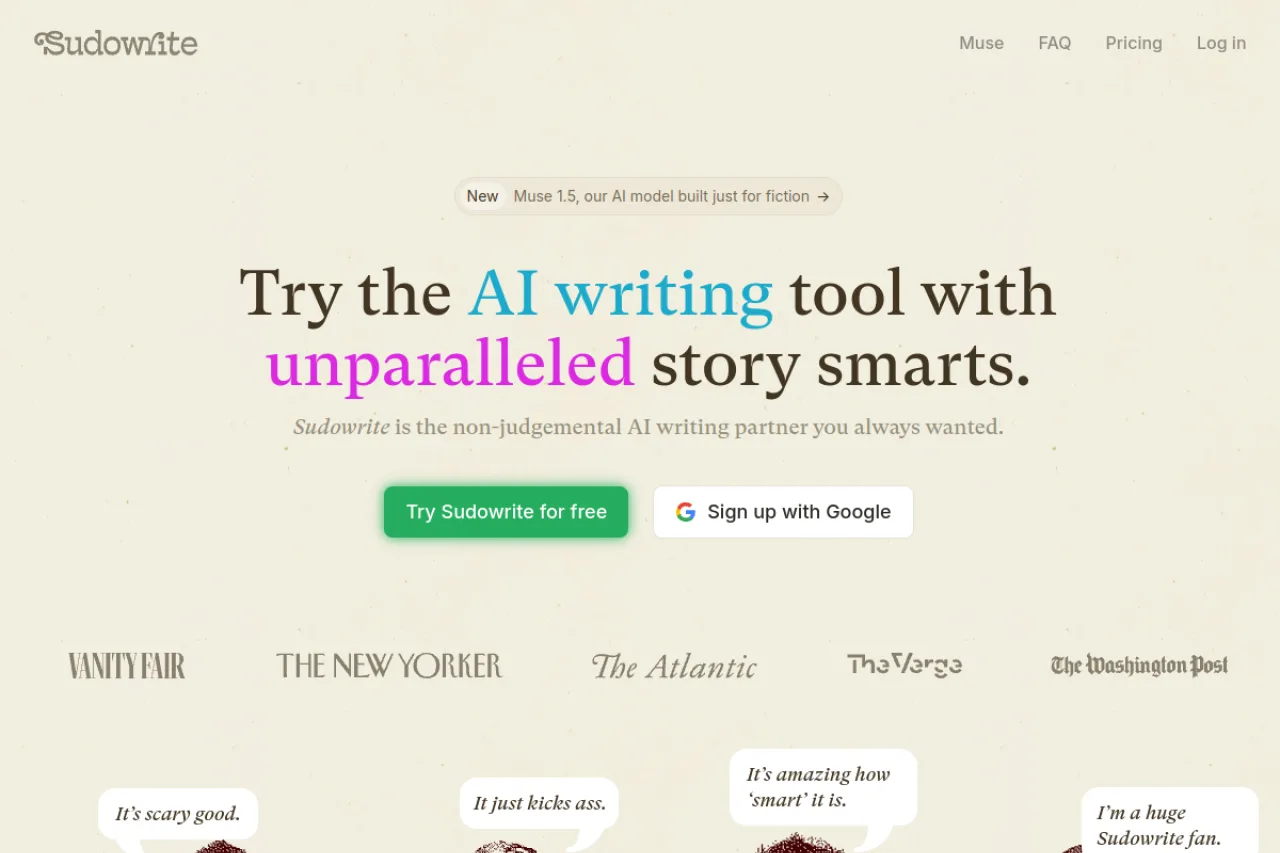
Sudowrite is an AI writing assistant built specifically for fiction authors and creative writers
Sudowrite is a fiction-focused AI writing assistant built for novelists, screenwriters, and creative writers. It combines craft-specific tools like Describe and Story Engine with a custom fiction model called Muse and a large plugin ecosystem, all delivered through a freemium, credit-based pricing structure. It is strongest for writers who want a purpose-built creative collaborator, and less suited to general business writing or teams needing collaborative document workflows.
Sudowrite is an AI writing partner built specifically for fiction writers, novelists, and screenwriters, distinguishing itself from general-purpose AI assistants by focusing entirely on the craft of storytelling. Rather than positioning itself as a do-everything productivity tool, it concentrates on the workflows creative writers actually use, from drafting scenes to shaping full-length manuscripts. The platform is organized around a set of purpose-built tools. Describe adds sensory detail and texture to prose, Story Engine helps writers plan and generate novel-length projects with structure, and a chat interface tuned for novelists lets you brainstorm plot, characters, and revisions in context. These features are designed to keep momentum going during a draft rather than replacing the author's voice. Sudowrite runs on Muse, a custom AI model trained specifically for fiction, which aims to produce prose that feels more natural for storytelling than generic large language models. The tool also offers an extensive library of plugins for custom editing, character analysis, and workflow automation, and it allows writers to create their own plugins without coding. Pricing follows a credit-based, freemium model. Different features consume varying amounts of credits, and tiers offer larger credit allocations rather than different feature sets, so the practical question for most buyers is how much they write each month and whether they can use their credits before expiration. Higher tiers add credit rollover. Writers should confirm current plans and credit costs on the official site, as pricing and allocations change. Sudowrite is best understood as a specialized creative-writing environment: opinionated, fiction-first, and most valuable to writers who want an AI collaborator that understands narrative rather than a general assistant repurposed for prose.

Sudowrite is a fiction-focused AI writing assistant for novelists, screenwriters, and creative writers, built around purpose-made tools like Story Engine and Describe and a custom fiction model called Muse. It runs on a credit-based freemium model with tiers differentiated by credit allocation. Founded by James Yu and Amit Gupta, the company is bootstrapped-leaning with modest reported revenue and a strong niche among independent authors.
Sudowrite is a software company building AI tools to help people write fiction. It was founded by James Yu and Amit Gupta, and its mission centers on serving fiction authors and creative writers specifically rather than the general productivity market. The product has drawn notable attention in mainstream press coverage of AI in creative writing.
The company operates a specialized, writer-first platform and has grown into a recognizable brand within the fiction-writing community, positioning itself as an AI collaborator that understands narrative craft rather than a general assistant adapted for prose.
Sudowrite's core capabilities are organized around fiction workflows. Describe adds sensory detail and texture to prose, Story Engine helps writers plan and generate novel-length projects with structure, and a novelist-oriented chat interface supports brainstorming plot, characters, and revisions in context.
The platform runs on Muse, a custom model trained specifically for fiction, aimed at producing more natural storytelling prose than general-purpose models. It also includes an extensive plugin library for editing, character analysis, and automation, and lets writers build their own plugins without coding. Access is metered through a credit system where features consume varying amounts of credits per use.
Sudowrite targets individual creative writers, including novelists, screenwriters, self-published authors, and hobbyist storytellers who want an AI tool tuned for narrative rather than business or technical writing. It competes with general assistants like ChatGPT Plus and fiction-adjacent tools like NovelAI, appealing most to writers who prioritize fiction-specific features and are willing to pay a premium for them.
Fiction writers, novelists, and screenwriters who use the tool day to day to draft, expand, revise, and structure their creative work.
Individual writers who purchase their own subscription and evaluate cost against their monthly writing output and credit usage.
Writing communities, author forums, and creative-writing content creators whose recommendations shape which AI tools authors try.
A dedicated fiction author working on a novel or screenplay who writes regularly, values narrative-tuned AI output, and is willing to invest in a specialized creative tool and learn its workflow.
Sudowrite has been reported as bootstrapped with no outside funding in one profile, while other sources list investors including 500 Global and Hyphen Capital; reported figures include roughly $1.8M ARR and a $5.3M valuation as of mid-2025, with around 16 employees. Founders are James Yu and Amit Gupta. Buyers should treat these third-party figures as approximate and unverified.
Sudowrite uses tiered subscriptions with a free option to start, and paid plans have ranged from roughly $10 to $59 per month depending on annual versus monthly billing and the tier you choose. The tiers differ mainly by credit allocation rather than features, with higher tiers offering more credits and rollover. Because pricing and credit amounts change, confirm the current details on the official site.
Sudowrite charges credits per action, and different features consume different amounts each time you use them. Higher-priced plans grant larger monthly credit allocations, and the top tier offers credit rollover so unused credits carry forward. This means your effective cost depends heavily on how often you generate content and which tools you use most.
Writers typically start a project, use Story Engine to outline and structure longer works, and then draft scenes with assistance from tools like Describe and the novelist-focused chat. You keep control of the manuscript while calling on AI tools to expand, revise, brainstorm, or add detail as needed. Plugins can be added to customize editing and analysis steps.
Sudowrite runs on Muse, a custom model trained specifically for fiction writing, which is intended to produce more natural narrative prose than general-purpose assistants. This fiction-first tuning is a central part of its positioning against tools like ChatGPT or NovelAI.
Sudowrite is designed primarily for individual writers rather than teams, and its plans are structured around single-user credit allocations. Writers needing shared documents, editorial workflows, or multi-seat accounts should verify availability directly, as the product's focus is the solo author's creative process.
Yes. Sudowrite offers a large plugin library for editing, character analysis, and automation, and it lets writers create custom plugins without any coding. This makes it possible to tailor the writing environment to your own genre, style, or revision process.
No, Sudowrite does not offer a free plan. However, they do offer a free trial that requires no credit card. The lowest paid tier is Hobby & Student at $10/month with 225,000 credits.
Integration details were not found in our research. The platform appears to be a standalone web application accessed through editor.sudowrite.com, but specific third-party integrations are not documented in the available materials.
Sudowrite differentiates itself by focusing exclusively on fiction writing with a custom Muse 1.5 model, while most AI writing tools target general content or business writing. The 1,000+ plugin library and credit rollover feature are also distinctive, though direct feature comparisons with competitors were not available in the research.
Side-by-side pages for pricing, features, and best-fit use cases.
Sudowrite is an AI writing assistant for fiction authors, while Textio focuses on HR writing like job descriptions and performance feedback.
Rytr is a versatile AI writing assistant for 40+ use cases, while Sudowrite focuses exclusively on fiction and creative storytelling.
Lavender excels at sales email coaching, but these six alternatives serve marketers, HR teams, teachers, and fiction writers who need AI writing help outside the SDR workflow.
Rytr covers 40+ use cases but lacks depth for fiction, performance tracking, and enterprise workflows. Here are six alternatives built for specific needs.
Sudowrite excels at fiction writing, but alternatives like Rytr, HyperWrite, and others offer broader use cases, different pricing models, or specialized features.
HubSpot AI (branded as Breeze AI) provides AI-powered tools integrated across HubSpot's CRM, marketing, sales, and service platforms
Writesonic is an AI search growth engine designed to help brands improve their visibility in AI-powered search platforms like ChatGPT, Perplexity, and other generative AI tools
Spellbook is an AI-powered contract drafting and review assistant designed specifically for lawyers and legal teams
TextCortex is an enterprise AI agent infrastructure platform that helps organizations deploy, organize, and govern AI agents across their workplace