
Google Veo
Video
Google DeepMind's text- and image-to-video model, generating high-quality clips with native audio.
make-videos
Free planView →

Luma Labs' fast, accessible text- and image-to-video generator.
A fast, friendly way into AI video — not always the absolute best quality, but quick, cheap, and easy to iterate with.
Dream Machine, from Luma Labs, generates video clips from text and images using its Ray models. It's known for speed and an approachable interface, with a free tier and affordable paid plans.
Luma Dream Machine is a generative video product from Luma Labs that creates short clips from text prompts or images, powered by its Ray family of models. It stands out for speed and ease of use, making it a popular starting point for creators new to AI video. A free tier lets you experiment, while paid plans add more generations, higher resolution, and commercial rights. Dream Machine sits alongside Sora, Veo, and Kling in the frontier video space; it may not always top quality benchmarks, but its quick iteration and accessible pricing make it a practical everyday tool.
Dream Machine is an AI video and image generation platform from Luma Labs (Luma AI) that creates video from text and image prompts, powered by its Ray video models. It is aimed at creators, designers, and studios, with a free non-commercial tier and paid subscriptions ranging from about $9.99/month up to a $499.99/month Premier plan. Commercial usage rights are included from the Standard tier upward.
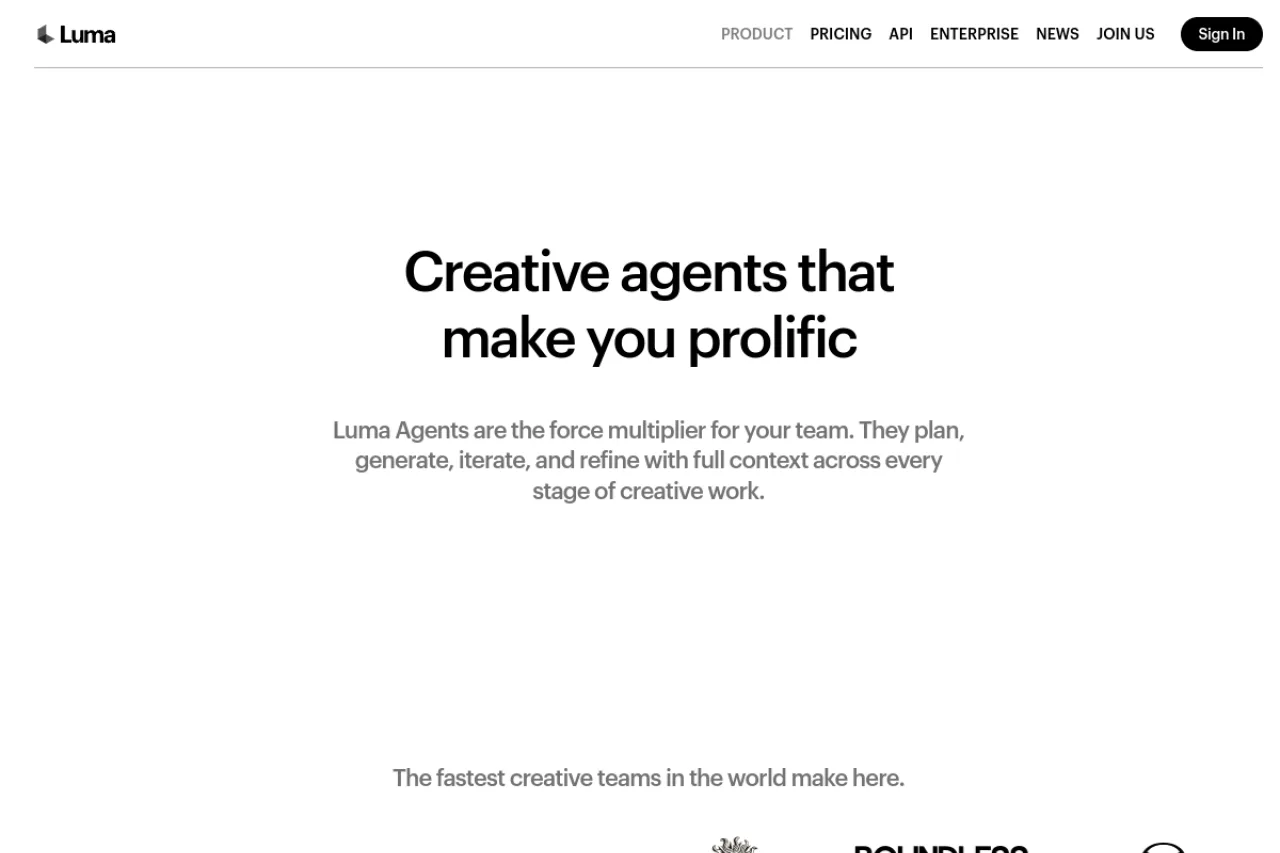
Dream Machine is built by Luma AI (Luma Labs), a San Francisco-based generative AI company focused on multimodal models for video and 3D. The company launched Dream Machine in 2024 and has expanded it with successive Ray models and additional tools such as Luma Agents.
Luma AI positions itself as a foundation-model company for visual generative AI and has attracted large-scale investment and infrastructure partnerships to support its research.
Dream Machine generates video from text and image prompts using Luma's Ray video models, with capabilities for image generation, camera and motion control, and iterative editing. It offers multiple subscription tiers that scale by credits, resolution, and generation speed.
The platform is delivered through a web app and mobile experiences, with commercial rights unlocked on paid plans and an unlimited generation option on higher tiers.
Dream Machine serves content creators, designers, marketers, and video production studios who want accessible AI video generation, spanning individual hobbyists on the free plan to professional teams on Pro and Premier tiers.
Creators, designers, and marketers generating AI video and images
Individual creators, creative teams, and production studios
Creative directors, designers, and social media managers
Creators and studios wanting accessible AI video generation with commercial rights and tiered credit plans.
Luma AI has raised approximately $1.07 billion across multiple rounds from 17 investors. Its Series C of $900 million, announced November 19, 2025, was led by Saudi AI firm HUMAIN, valuing the company at upwards of $4 billion; NVIDIA is among its backers, and the company is building an AI supercluster in Saudi Arabia. Earlier investors include Andreessen Horowitz and others.
Yes, there's a free tier with limited generations; paid plans add more usage and commercial rights.
Quickly turning text or images into short video clips for social, concepts, and creative work.
Yes — it's one of the easier AI video tools to start with thanks to its speed and simple interface.
Side-by-side pages for pricing, features, and best-fit use cases.
Google DeepMind's text- and image-to-video model, generating high-quality clips with native audio.

A text- and image-to-video generator known for realistic motion and longer clips.
One workspace to generate video across Kling, Veo, Runway and other models
All-in-one AI studio with 100-plus tools for video, image, and audio